Every era of solar power has been defined by a voltage. The industry moved from 600 V to 1,000 V, then to today’s workhorse standard of 1,500 V DC — and each step reshaped the entire balance of system: longer strings, thinner copper, fewer combiner boxes, lower cost per watt. That cycle is starting again. In 2026, 2,000 V DC officially moved from concept to product.
In August, Amphenol Industrial launched the H4 Plus™ P2KV, a connector rated for 2,000 V DC operation with 6 AWG / 16 mm² photovoltaic cable — up to 70 A under TÜV certification at 85 °C, with contact resistance of ≤0.25 mΩ. Trina Solar’s 210-series modules have already earned the world’s first UL 2000V certificate, Jinko’s Tiger Neo 2,000 V modules have followed, and inverter makers are building ecosystems around the higher-voltage architecture. The module-to-connector chain for the next voltage era now exists.
Why the Industry Is Chasing 2,000 Volts
The economics are simple and compelling. Higher DC voltage means lower current for the same power, which means less resistive loss, thinner conductors and longer strings. Industry analyses put the gains in concrete numbers:
- BOS cost reduction of roughly 3–5% when moving from 1,500 V to purpose-built 2,000 V architectures (Wood Mackenzie and manufacturer estimates)
- LCOE reductions above 3% reported by module makers for large ground-mount projects
- Approximately 26% less total DC cable length in a 2,000 V design compared with a 1,500 V equivalent
- Fewer parallel strings, smaller combiner boxes, and less labor across megawatt-scale sites
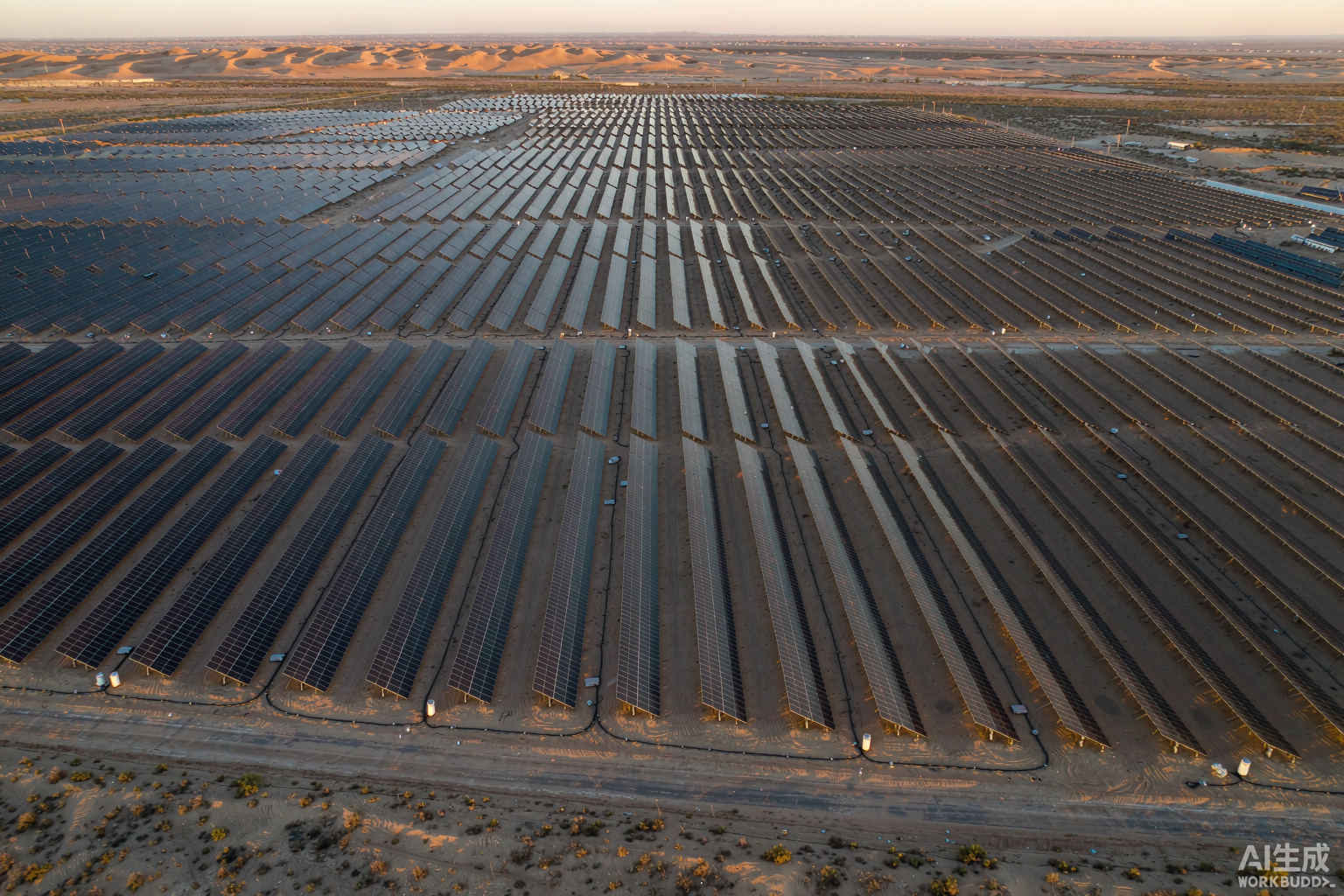
Nowhere is this more valuable than in the desert mega-projects now defining global demand. In 2026, Saudi Arabia’s Principal Buyer signed power purchase agreements with an ACWA Power-led consortium for seven renewable projects totaling 15 GW — about $8.3 billion — with five utility-scale PV plants of 2–3 GW each clearing at LCOE as low as 1.26 US cents/kWh, the largest single-phase renewable signing on record. Masdar, GD Power and KEPCO reached financial close on the 2 GW Al Sadawi plant in the Eastern Province. At these price points, every centime of BOS savings is competitive advantage — and voltage is where it comes from.
What 2,000 V Changes on the DC Side
Stepping from 1,500 V to 2,000 V is not a spec-sheet edit. It changes the physics that every DC component must survive:
- Cables. Insulation thickness, dielectric strength, tracking resistance and partial-discharge behavior all escalate. UL 4703 already covers 2,000 V photovoltaic wire in North America with dual-layer insulation; IEC 62930, currently capped at 1,500 V, is being updated to include higher voltage tiers. A cable qualified at 1,500 V cannot simply be relabeled.
- Connectors. Creepage and clearance distances grow, contact geometry must hold low resistance at higher stress, and materials must resist the intensified electric-field aging that turns into partial discharge — and eventually carbonized tracking paths.
- Overcurrent protection. DC breakers and gPV fuses must be rated and tested for the higher arc energy of a 2,000 V fault. Arcs at this voltage are longer, hotter and far less willing to extinguish — DC has no natural zero crossing.
- Surge protection and enclosures. SPDs, combiner boxes and insulation coordination all need re-verification for the new voltage class.
The quiet risk in the transition: mixed systems. During the migration years, 1,500 V and 2,000 V components will coexist on the same sites. Voltage-class mismatches — a 1,500 V fuse in a 2,000 V string, a 1,500 V connector pair on a 2,000 V cable — are exactly the failure modes that standards exist to prevent.
A 5-Point Qualification Checklist for the 2,000 V Transition
- Ask for the voltage class, not the brand. Every certificate should state the system voltage it covers — 1,000 V, 1,500 V or 2,000 V — under the right standard (IEC 62930 / EN 50618 for cable, IEC 62852 / UL 6703 for connectors, UL 4703 for North American PV wire).
- Check the whole chain, not single parts. Cable, connector, breaker, fuse and SPD must share one voltage class. A 2,000 V cable with 1,500 V accessories is a 1,500 V system.
- Verify thermal ratings at real ambient temperatures. Desert projects derate everything; a connector’s 70 A rating at 85 °C matters more than its nameplate current.
- Prefer vertically integrated manufacturers. Suppliers who control their own copper drawing, tinning, cross-linking (electron-beam irradiation) and assembly can re-qualify materials for higher voltage far faster than traders.
- Plan the mixed-voltage site. Label, segregate and document 1,500 V and 2,000 V strings during transition years to eliminate mismatch risk.
Why This Fits RISIN Energy’s Playbook
Voltage transitions are exactly when component suppliers are sorted — and where RISIN ENERGY CO., LIMITED has built its position since 2010. From its manufacturing base in Dongguan, China, RISIN supplies the full DC chain that every voltage upgrade rewrites:
- In-house cable manufacturing, certified to the current ceiling. RISIN’s solar cables carry TÜV 2PfG 1169 (1,000 V DC) and TÜV EN 50618 H1Z2Z2-K (1,500 V DC) certificates with a 25-year warranty and service life. Because RISIN runs its own copper drawing, annealing, tinning, stranding, insulation and sheath extrusion — including electron-beam irradiation cross-linking, the process that gives XLPO insulation its high-voltage and long-life performance — the company controls the exact material variables that the 2,000 V re-qualification will stress.
- Connectors engineered for low, stable contact resistance. RISIN’s MC4 connectors are approved to TÜV EN 50521:2008 (1,000 V) and EN 62852 (1,500 V), produced with die-cast pins, automated O-ring and housing assembly, and verified batch-by-batch through resistance, pull-force, waterproof and insulation testing — the same parameters (contact resistance, sealing, locking force) that define next-generation high-voltage connector performance.
- The complete DC protection chain. DC MCBs and MCCBs, DC SPDs, and gPV fuse holders in 10×38, 10×65 and 10×85 mm formats up to 1,500 V DC — matched, certified and shipped as one system, so EPCs never mix voltage classes across vendors.
- OEM/ODM harness capability. Pre-crimped string and branch assemblies, custom lengths and connector protection boxes — including solutions for fishery-PV and marine projects where humidity and salt fog accelerate insulation aging. As 2,000 V reaches coastal and desert sites, factory-terminated, factory-tested harnesses become the safest answer to field-termination risk.
For buyers, the practical takeaway is simple: the 1,500 V ecosystem will dominate for years, and it must be sourced well — but the suppliers worth partnering with for 2030 are the ones who already master the physics, materials and QC discipline behind it, and who manufacture rather than trade.
Outlook: Voltage Is the New Cost Curve
Module efficiency gains are now incremental; voltage architecture is where the next big LCOE step lives. With 2,000 V modules certified, connectors launched, and gigawatt-scale desert projects signed at record-low tariffs, the transition has a clear timeline: pilot projects first, mainstream adoption as IEC and UL standards consolidate, and a global DC cable market projected to grow from $2.07 billion in 2025 to $3.64 billion by 2032.
Installers, EPCs and distributors who lock in certified, vertically integrated DC suppliers now — for today’s 1,500 V projects and tomorrow’s 2,000 V ones — will be on the right side of that curve.
About RISIN ENERGY CO., LIMITED
Founded in 2010 and headquartered in Dongguan, China, RISIN ENERGY is a manufacturer and global supplier of solar PV cables, MC4 solar connectors, PV fuse holders, DC circuit breakers, surge protection devices, solar charge controllers, micro inverters and photovoltaic system accessories. RISIN’s products carry TÜV (2PfG 1169, EN 50618, EN 50521, EN 62852), CE and IEC certifications, backed by a 25-year product warranty and full in-house QC testing.
Explore the product range:
- 1,500 V EN 50618 H1Z2Z2-K Solar Cables
- 1,500 V 50A MC4 Solar Connectors
- Solar DC Circuit Breakers (6–63 A)
- DC MCCBs up to 1,250 A
- 1,500 V gPV Fuse Holders (10×38 / 10×65 / 10×85 mm)
- DC Surge Protection Devices (20–40 kA)
- All Featured Products
Planning a utility-scale project or upgrading your DC component line? Contact the RISIN team via risinenergy.com.
Post time: Oct-10-2026